by Jody McBrien, AWG Paris
Human Trafficking is the recruitment, transportation, transfer, harbouring or receipt of people through force, fraud or deception, with the aim of exploiting them for profit.
~United Nations Office on Drugs and Crime (UNODC)
July 30 marks the World Day Against Trafficking in Persons. This year’s theme looks at how victims are often engaged through online scams. The UN Office on Drugs and Crimes (UNODC) reports that transnational criminal groups are using these scams to funnel thousands of people into forced criminality by putting false job ads online and transporting victims to illegal compounds where they are forced to run fraudulent online operations. These include romance and crypto schemes. Human Rights Team Co-Chair Mary Adams and I plan to follow up this blog post with a more in-depth one about online trafficking this fall.
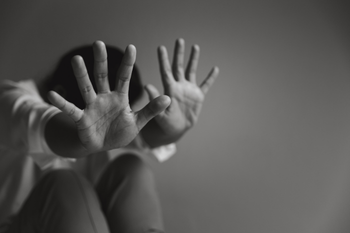 Human trafficking encompasses multiple activities of violence and victimization, violating people’s rights and their dignity, and sometimes taking their lives. These include forced sexual exploitation (including forced pornography), forced labor (agricultural, domestic servitude, factory work, etc.), organ removal, forced begging, child soldiers, debt bondage and forced marriage. The international organization Our Rescue notes that the issues of human smuggling, kidnapping and missing persons are not defined as human trafficking, although runaway and missing children may become victims of child sex trafficking.
This article specifically looks at forced sexual exploitation. Our FAWCO clubs have come together through Target Program 6 to support one important NGO helping girls and young women in Vietnam leave sexual trafficking that they were tricked or sold into, including online victimization. Working with Power Her Path, a project of the Pacific Links Foundation founded by Vietnamese-American refugee women, we are making it possible for over 100 girls and young women to escape sexual human trafficking and begin healthy new lives in which they can feel strengthened and valued. I am so grateful to our FAWCO clubs and honored to represent this remarkable cause.
FAWCO members can be proud of the many ways in which our organization has supported trafficked girls and women. Target Program 2 (2013–16) supported Free the Girls, an organization that helped formerly sex-trafficked women in Africa and Latin America. Additionally, FAWCO Foundation Development grants have helped numerous organizations supporting trafficked women and girls:
- Pillow Project to Stop Child Trafficking (2018, Kenya)
- More than Just a Cup of Coffee (2019, Amsterdam)
- The Bridge to Hope (2020, Amsterdam)
- Veronica’s Voice (2020, Kansas City)
- A Helping Hand (2021, Torino)
- Providing Support for Victims of Prostitution and Human Trafficking for Sexual Exploitation (2021, France)
- Safety Pathways (2025, Central Vietnam)
Sexual trafficking is a worldwide phenomenon. In July 2026, the BBC reported on a crackdown on human trafficking that spanned 59 countries. The report indicated that online and social media organizations in Cambodia and Europe were discovered and dismantled. Over 2,000 victims were identified, the vast majority of whom were women.
Note that there is a difference between sex trafficking and prostitution, but it is complicated. Technically, trafficking is without consent, and prostitution involves consent. A number of organizations advocate for the decriminalization of prostitution and an end to stigma and discrimination. However, many girls and women who “willingly” consent to prostitution do so because of extreme poverty and/or the need to take care of their children. They do not make this choice because they want to.
The Sex Trade in India
The PBS program Frontline recently aired a documentary on sex workers in India. It focused on the Kamatipura district in Mumbai and trafficking in Calcutta. Kamatipura, a poor district in India, has roughly 60,000 sex workers who receive 50 cents to $1.50 per sex act. Their only defense against AIDs is a condom, but most men refuse. Over 50% of the sex trade workers are HIV positive. Men tend to pay more for unprotected sex, and the pimps and brothel owners care more about money than health. Many girls are trafficked by their own families. Others become prostitutes due to extreme poverty.
The rescue organization Sanlaap operates in Mumbai and reports that most of the workers are sold between the ages of 13 and 16. Girls describe being chained or beaten. Many do not know about HIV or AIDs. A social worker stated that the trauma of being sex trafficked can preclude thinking about health or disease.
According to the documentary, an organization called ASHA, made up of sex workers, operates in Mumbai as peer educators to help girls and women understand the risks of HIV and AIDs. Unfortunately, they are often too late, as they may not reach the girls until 3–6 months after their captivity. By that time, many are infected.
While one might hope that police would help these girls and women, they are often a part of the problem. According to the documentary, some police force the girls to have sex, or they expect bribes to release the girls.
India has roughly 4.5 million HIV-infected people, and Mumbai has the largest number of AIDs cases in the country. An estimated 20% of all married women in India have been infected by their husbands.
Calcutta
The red light district of Calcutta, Sonagachi, is home to tens of thousands of prostitutes. Yet, Calcutta has the lowest AIDs rates in India. The reason is due to the effectiveness of NGO work to educate women and girl sex workers in the city. The Frontline documentary highlighted Putul Singh, sold into the sex trade by her husband when she was 20. Putul became a worker for an NGO that provides basic healthcare to sex workers, opening a door to discussing safe sex. The organization’s workers try to explain how STDs and AIDs are contracted, though many men refuse to believe them. Still, women in Calcutta meet weekly to discuss the many issues they face, including police harassment. Additionally, even though prostitution is illegal, they have a workers’ union. Condom use in the city has risen from 3% to 90%, and the AIDs rate is one-fifth that of Mumbai.
Sadly, it is the youngest girls in the trade who are the hardest to reach. Indications are that they are unaware of the trade union or the dangers of AIDs, or of AIDs prevention. If they are able to escape, their families typically do not want to take them back.
Florida, USA
According to the Department of Homeland Security, sex trafficking has been reported in all 50 states and the District of Colombia. A 2024 report by the University of South Florida stated that 700,000 people were trafficked in Florida, 100,000 of them children in the sex trade. Florida ranks third in the US for trafficking, for both sexual and manual labor.
I lived in Sarasota, Florida for just over 20 years. During that time, I came to learn about Selah Freedom, an organization in the city that has helped at least 7,000 survivors to date. Its work concentrates on five aspects of sex trafficking: prevention, awareness, outreach, residential and consulting. The organization’s website presents some stunning statistics:
- 10% of children are sexually abused.
- It is a $173 billion industry worldwide.
- Many report abuse beginning between the ages of 3 and 4.
- Nearly 50% of underaged trafficking victims say that pornography was made of them.
- Annually, 2 million children are sold into sex trafficking.
- Every 24 hours, a victim may be sold as many as 40 times.
- 25% of young people are sexually solicited.
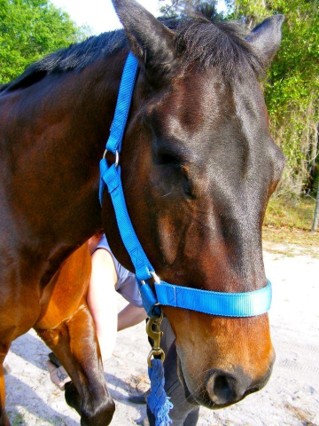 I worked with some of these young women at a horse farm where I had donated my horse Magic. SMART – the Sarasota Manatee Association for Riding Therapy – worked with survivors at Selah Freedom, as well as war veterans and young people with special needs. My horse Magic was a favorite with everyone, as he was gentle, kind, and rideable—and completely blind (as in, his useless eyes were removed when he was 6 years old). He was an inspiration to people with various challenges.
The young women from Selah Freedom were so impressive. They enjoyed the responsibilities at SMART, such as cleaning stalls and brushing the horses. They were very open with me about what they had experienced and how they were rebuilding their lives. I think about what they experienced, and I am so moved by their strength to get past the anguish of being used as sexual objects to regain a sense of their worth and dignity.
Southeast Asia
A 2026 UN report described an online industry worth tens of billions annually that is powered by trafficked workers who are subject to torture, sexual abuse and forced labor in Southeast Asia.
Our FAWCO Target Project, Power Her Path, works to provide support to girls and women who have been victimized by the sex trade across the Vietnam-China border. PHP provides initial support such as transportation, clothing, food and temporary housing. The organization then provides opportunities such as education, counseling and small seed grants to help girls and women create new lives such that they will never be subject to the sex trade again.
It’s one thing to talk about this as though it is a remote, though important topic. But just imagine if your own daughter were stolen into such a horrific scheme. The perpetrators are vicious and cruel. They don’t care about the girls whose lives they are harming.
 Women of FAWCO, I know, we value human life. It’s our history and our legacy. It’s hard for us to imagine the kind of cruelty that some humans are capable of.
I know. I saw it in northern Uganda when I documented what the Lord’s Resistance Army did to young people, forcing them to become child soldiers or sex slaves to the insurgents.
I often thought that there would come a time when humanity would progress to a place in which we would come to care more about one another, about the earth, about acceptance of all living beings. I see that greed, the desire for power, discrimination and resistance to diversity continue to cloud the pathways to a world that works together to the betterment of all.
Our founder, Caroline Curtis Brown, believed in the possibility of world peace. In founding FAWCO, she suggested that clubs could “help one another solve problems common to them all and to aid women whose citizenship rights were being ignored or restricted.”
I doubt that Caroline was thinking of the issues we discuss today, but I like to think that she would, were she here today. I have become a strong proponent of FAWCO as I have learned more about its considerations for human rights and our environment. We are all a part of a proud and important legacy to uphold the rights and the voices of women in the most important issues of our world.
Let us continue to work together towards a world of our dreams—a place in which all people can feel safe, where we help those in need, where minorities feel accepted.
DON’T MISS! The FAWCO Human Rights team is providing an online presentation on September 8 titled “What is human trafficking?“ Click on the link to sign up!
Resources:
US Department of State Trafficking in Persons Report
Organization for Security and Co-operation in Europe
Group of Experts on Action Against Trafficking in Human Beings (Council of Europe)