
by Balbina Garcia-Reyes, Heidelberg IWC
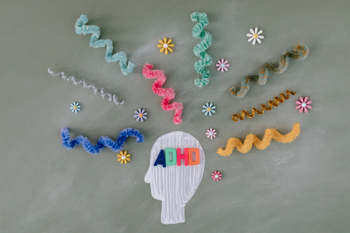 For years, the archetypal image of the child with ADHD was the boy who couldn’t sit still, who constantly interrupted the teacher and who bounced all over the classroom. That was only half the story, though. That image also went a long way towards making many girls effectively invisible.
Girls with ADHD are more likely than boys to present with inattention symptoms rather than overt hyperactivity (Cuffman, 2026). Rather than being the disruptive child, a girl may be the one who’s staring out the window, losing the plot, forgetting her homework, having a terrible time with organization and taking ages to do the things that other children do in a matter of minutes. She may be described as a bit dreamy, a bit scattered, a bit sensitive, or just plain “not up to her potential.” And as she’s not causing any bother, no one really asks why.
Many of the girls become quite adept at compensating. They simply copy what their more organized peers do. They rely on a final dash of adrenaline. They work twice as hard to get the same outcome. Some become extreme perfectionists, terrified that one missed assignment or one small oversight will reveal just how hard they are working. From the outside, they may look like they’re managing. Inside, they may well be absolutely exhausted.
This is one of the reasons ADHD in women can go completely undiagnosed for decades (Attoe & Climie, 2023). On top of that, academic ability can easily mask childhood difficulties, especially in a highly structured environment (Hinshaw et al., 2022). As these girls grow and start to take on more and more responsibilities (university, work, relationships, children, house, etc.), the systems that once kept it all together start to fall apart.
For some women, it’s only when their own child is being assessed for ADHD that they come to the realisation. They’re in the middle of a discussion about forgetfulness, emotional overwhelm, procrastination, difficulty getting going on tasks, a racing mind and so on and all of a sudden they go, “Well, that sounds like me.”
An adult diagnosis can be absolutely life-changing in terms of relief. All those things that you used to see as laziness, as carelessness, as a lack of discipline can suddenly be understood in a completely different way. However, that relief is often accompanied by grief.
A late diagnosis can alter your recollection of events. You might look back at all the things you never completed, all the financial blunders, all the messy relationships, and years of sheer overwhelm, and ask yourself, “What if someone had just seen it earlier?.” The “unfinished” project no longer looks like laziness. The chronic lateness no longer looks like carelessness. The shame we've all carried for years may finally have an explanation.
There can be grief for the child who felt she was “too much” or “not enough.” Grief for the opportunities that were missed. Grief for the energy expended in hiding her difficulties. And grief for the person she might have become had she had the support she needed at an earlier stage.
A diagnosis doesn’t rewrite the past. It can, however, enable a more accurate and empathetic reinterpretation of the past. It can also be the gateway to treatment, to practical strategies and to accommodations. It can be the beginning of a much better understanding of how the individual brain works.
The real challenge now is to get better at spotting ADHD in girls prior to them reaching adulthood, so they don’t carry the burden of self-blame for decades. Parents and educators can look beyond the disruptive-child stereotype. A girl with ADHD may:
- appear to daydream or mentally “disappear” during lessons;
- understand material but repeatedly forget homework, books or instructions;
- struggle with organization, time management and transitions;
- procrastinate intensely, then complete work in frantic last-minute bursts;
- seem unusually overwhelmed by ordinary demands;
- talk excessively, interrupt or become highly animated in comfortable settings even if she is quiet at school;
- become intensely absorbed in subjects she loves while finding routine tasks almost impossible to begin;
- show perfectionism, anxiety or strong emotional reactions that may be masking underlying difficulties;
- work far harder than peers to maintain apparently good grades.
None of these signs in themselves indicate a child has ADHD. There are all sorts of other explanations for them, and a diagnosis of ADHD requires a professional. What is important is to be aware of the patterns and to ask the right question. Rather than “Why can't she just try harder?” we might well ask “Why does it seem so much harder for her than it should?”
That tiny shift could be the turning point in a girl’s life. Women diagnosed later in life cannot recoup the years when they didn’t have that support. But if we can identify it earlier in the next generation, then it could mean that fewer girls go through life with the belief that a neurological difference is a character flaw or a moral failure. ADHD was there all along; we simply were not always taught how to see it.
Photo from canva.com
References
Cuffman, C. (2026). ADHD in Girls vs. Boys. Cleveland Clinic. Does ADHD Look Different in Boys and Girls?
Attoe, D. E. & Climie, E. A. (2023). Miss. Diagnosis: A Systematic Review of ADHD in Adult Women. Journal of Attention Disorders 27(7), pp. 645-657.
Hinshaw, S. P., Nguyen, P. T. & O’Grady, S. M. (2022). Annual Research Review: Attention‐deficit/hyperactivity disorder in girls and women: underrepresentation, longitudinal processes, and key directions. Journal of Child Psychology and Psychiatry 63(4), pp. 484-496.