by Marelie Manders, Heidelberg IWC and Human Rights Team Co-Chair, and Dana Cognetta Fritchie, AIWC Frankfurt and Education Team Co-Chair
On June 12, the World Day Against Child Labor, our primary focus must be on the roughly 138 million children around the world who are working instead of learning. Yet, our FAWCO Education and Human Rights Teams believe it may be worth a deeper dive to examine one of the most powerful tools for reducing child labor: expanding education and vocational opportunities for adults.
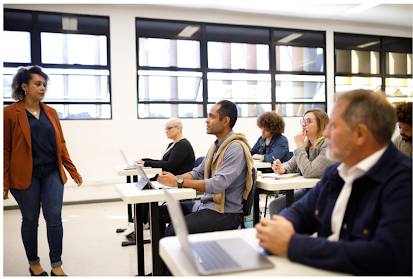 Behind each of those 138 million children is a family navigating poverty, inequality, and therefore limited opportunity. It is at this intersection of education and human rights where lasting change begins. When families gain access to learning, develop new pathways that develop new skills, and make use of new opportunities, their children gain something invaluable: the chance to reach their full potential. When caregivers and parents have access to literacy education, financial literacy, vocational training and economic opportunities, children are more likely to remain in school and less likely to enter the workforce prematurely. This is how the cycle breaks—not just for one child, but across generations.
Adults with stronger literacy skills are often better able to navigate healthcare systems, understand labor rights, manage household finances, support their children’s learning, and access higher-paying employment opportunities. When families have viable economic alternatives and a better understanding of their rights, children are more likely to remain in school and are less vulnerable to child labor, trafficking and other forms of exploitation. As family incomes become more stable, the economic pressures that can contribute to child labor often diminish.This may be best reflected in the work being done by our Target Project, Power Her Path, which supports Pacific Links Foundation in providing trafficked and at-risk women and girls in Vietnam with the education and vocational training they need to reclaim their futures and create new pathways for future generations.
Among children aged 5 to 14 engaged in child labor, approximately 31 percent are not attending school. When educational opportunities are lost in childhood, the effects do not end there. Those children eventually become adults who may face limited employment options and ongoing economic insecurity, making it harder to provide different opportunities for their own families. This is why breaking the cycle requires us to think not only about education for children, but also about lifelong learning and economic opportunity for adults. This is one reason why Sustainable Development Goal 4 (Quality Education) extends beyond children and classrooms. Education is a lifelong process. Learning opportunities for adults can be just as transformative as educational opportunities for children.
The connection between education and child labor is particularly evident in communities facing poverty, migration or exploitation. Families may rely on children’s labor not because they do not value education, but because they have limited alternatives. Expanding educational opportunities for adults helps create those alternatives.
It is well known that the right to education is an international human right, protected through the International Covenant on Economic, Social and Cultural Rights (ICESCR). This builds on Article 26 of the Universal Declaration of Human Rights (UDHR), enforcing education-related provisions including free compulsory primary education, accessible secondary education and equal access to higher education.
Socioeconomic rights, like the right to education, are special types of human rights that require “progressive realization,” meaning states are not expected to deliver full realization overnight, but must demonstrate measurable, forward movement using the maximum resources available. While adult learning is not explicitly recognized in international treaties, there is some encouraging movement in the international human rights discourse. UNESCO’s 2015 Recommendation on Adult Learning and Education recognizes adult learning as a major building block for the creation of community learning, something that fosters a culture of learning throughout life and in families and communities. UNESCO also has a permanent Institute for Lifelong Learning (UIL) that promotes lifelong learning for all.
There are several arguments for adult learning to be specifically recognized as a human right on the international playing field. Firstly, the importance of adult learning is already recognized internationally through UNESCO’s abovementioned recommendation. UNESCO’s lifelong learning agenda has also received renewed attention through the 2030 SDGs which highlight a number of education goals, also focused on adults. Secondly, international human rights treaty bodies are already moving in the direction of recognizing such a right. For example, the Committee on the Elimination of Discrimination against Women (CEDAW Committee) has explained that states’ obligations to eliminate discrimination in education include older women and that states must ensure equality of opportunity in education for women of all ages, including access to adult education and lifelong learning opportunities. Finally, this right is essential for development and equality. The international community has already identified adult education and learning as fundamental to eradicating poverty, combating inequality and fostering social inclusion. Nevertheless, adult education is one of the most underfunded levels of education in states across the world.
An obstacle to a future right to adult learning would be its status as a socioeconomic right. The realization of this right would require states to deliver measurable forward movement on the right using the maximum resources available. This unfortunately means that poorer states would inevitably have worse implementation of this right as they may simply not have the necessary resources to provide the right to those who need it most.
This resource gap presents a troubling cycle, especially in areas where child labor remains prevalent. In our world’s poorest countries, the absence of adult education/vocational training perpetuates multi-generational economic insecurity. When adults lack basic literacy skills, vocational opportunities, and pathways to decent work, families are much more likely to depend on their children’s economic contributions to survive. Children miss school, enter the workforce and grow into adults lacking the foundational education needed to break this cycle of child labor. These children, now adults, face the same barriers to adult learning that their own parents/guardians did. Added to this is the simple truth that the very states least equipped to implement a right to adult learning are also those where child labor rates are highest. These issues are not separate concerns. Child labor and adult learning are deeply intertwined: investment in one will strengthen the other.
Call to action: Check out FAWCO’s Target Project, Power Her Path: Empowering Trafficking Survivors & Vulnerable Migrants to Thrive, a project from the the Pacific Links Foundation, to learn more about how you can get involved and make a difference. Pacific Links Foundation offers a robust program to combat child labor through vocational training, job readiness and job placement, which helps build lasting economic stability and safeguards young people against trafficking and exploitation.
Image: Canva