
by Mary Manning, Heidelberg IWC
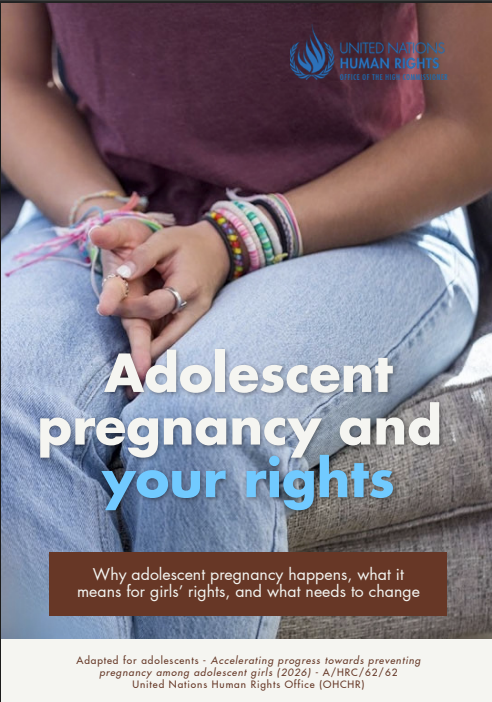
In September 2026, the UN Office of the High Commissioner for Human Rights (OHCHR) published Accelerating progress towards preventing pregnancy among adolescent girls. It estimates that 12.3 million girls aged 10 to 19 gave birth in 2025, and that around 21 million adolescent girls in low- and middle-income countries become pregnant each year, often unintentionally. The true figures are likely higher, because stigma, fear and weak reporting systems mean many pregnancies are never recorded. Girls who become pregnant face a greater risk of preventable maternal death than adult women, and early pregnancy often ends their education.
The report argues effectively that adolescent pregnancy is a human rights issue, not a question of individual choice. It is driven by child marriage, sexual violence and gender inequality, as well as lack of access to education, accurate information and health care. In low-income countries, 43% of girls aged 15 to 19 who want to avoid pregnancy lack access to modern contraception. OHCHR calls on governments to end child marriage, provide comprehensive sexuality education and confidential health services for adolescents, and involve young people in the decisions that affect them.
There is evidence that this works. Coordinated, rights-based programs have cut adolescent birth rates by more than half within a decade in some places. In Latin America, one project saw pregnancies among girls under 15 fall by 43% over four years.
Alongside the full report, OHCHR has created Adolescent pregnancy and your rights, a short guide written for young people. It explains in plain language why adolescent pregnancy happens, what rights girls have, and what needs to change. Consider sharing it with a teenager in your life or within your community.