
by Dawn Parker, AWAquitaine and Health Co-Chair
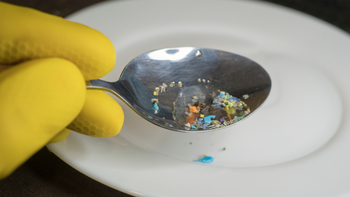 I selected this topic in recognition of its growing global relevance and its direct impact on women’s health, environmental sustainability, and community well-being—core priorities of FAWCO. As microplastics increasingly infiltrate the food chain, understanding their potential health consequences aligns with FAWCO’s commitment to education, advocacy, and informed decision-making. This article supports FAWCO’s mission to empower women worldwide through knowledge that promotes healthier lives, environmental responsibility, and proactive engagement in public health issues.
“How much plastic will you have for dinner, sir? And you, ma’am?” While that may seem like a line from a satirical skit on Saturday Night Live, research is showing it’s much too close to reality.
Ninety percent of animal and vegetable protein samples tested positive for microplastics,1 teeny polymer fragments that can range from less than 0.2 inch (5 millimeters) down to 1/25,000th of an inch (1 micrometer), according to a February 2024 study. Anything smaller than 1 micrometer is a nanoplastic that must be measured in billionths of a meter.
Even vegetarians can’t escape, according to a 2020 study. If the plastic is small enough, fruits and vegetables can absorb microplastics through their root systems and transfer those chemical bits to the plant’s stems, leaves, seeds and fruit.2
Salt can be packed with plastic. A 2023 study found coarse Himalayan pink salt mined from the ground had the most microplastics, followed by black salt and marine salt. Sugar is also “an important route of human exposure to these micropollutants,” according to a 2022 study.3
Even tea bags, many of which are made of plastic, can release enormous amounts of the material. Researchers at McGill University in Quebec, Canada found brewing a single plastic teabag released about 11.6 billion microplastic and 3.1 billion nanoplastic particles into the water.4
Dangers to human health
While microplastics have been found in the human lung, maternal and fetal placental tissues, human breast milk and human blood, until recently there was very little research on how these polymers affect the body’s organs and functions.
A March 2024 study found people with microplastics or nanoplastics in arteries in the neck were twice as likely to have a heart attack, stroke or die from any cause over the next three years than people who had none.5
Nanoplastics are the most worrisome type of plastic pollution for human health, experts say. That’s because the minuscule particles can invade individual cells and tissues in major organs, potentially interrupting cellular processes and depositing endocrine-disrupting chemicals such as bisphenols, phthalates, flame retardants, per- and polyfluorinated substances, or PFAS, and heavy metals.
“All of those chemicals are used in the manufacturing of plastic, so if a plastic makes its way into us, it’s carrying those chemicals with it.”3
Ways to reduce plastic
- Stop drinking from plastic bottles
- NEVER heat food in plastic
- No takeaway left in plastic
- Ditch plastic tea bags
As we consider the growing presence of microplastics in our food and environment, this issue reinforces the interconnected nature of global health, environmental stewardship and informed consumer choices—key topics for FAWCO members. By increasing awareness and encouraging practical steps to reduce exposure, we support FAWCO’s mission to educate and empower women to make meaningful changes within their families and communities. Addressing challenges like microplastic contamination is not only a personal health priority but also a collective responsibility that aligns with FAWCO’s commitment to building a healthier, more sustainable world.
References:
1. Exposure of U.S. adults to microplastics from commonly-consumed proteins - Madeleine H. Milne et al., Environmental Pollution, February 15. 2024
2. Micro- and nano-plastics in edible fruit and vegetables. The first diet risks assessment for the general population - Gea Oliveri Conti et al., Environmental Research, August 2020
3. Which foods have the most plastics? You may be surprised - Sandee LaMotte, CNN, April 22, 2024
4. Plastic Teabags Release Billions of Microparticles and Nanoparticles into Tea - Laura M. Hernandez et al., American Chemical Society, 2019
5. Microplastics and Nanoplastics in Atheromas and Cardiovascular Events - Raffaele Marfella et al., The New England Journal of Medicine, 2024
So Much Produce Comes in Plastic. Is There a Better Way? - Kim Severson, New York Times, April 3, 2024
From Farm to Kitchen: The Environmental Impacts of U.S. Food Waste - U.S. Environmental Protection Agency, November 2021
Photo from Canva.com