
by Maria Psarianou, AWO Greece
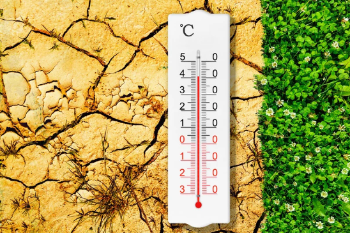 According to the UN Environment Program’s Emissions Gap Report 2026, “the chance of holding global warming to below 1.5 °C above pre-industrial levels with no or limited overshoot is gone.” The report warns that every additional fraction of a degree, and every additional year of warming above 1.5 °C, will increase climate impacts and risks, such as the deadly floods, heatwaves and wildfires that have plagued many nations this year.¹
The Climate Action Tracker’s Warming Projections Global Update, released at COP31, shows that global warming is headed towards an irrecoverable overshoot of 1.5 °C unless governments rapidly reduce emissions to limit both the magnitude and the duration of this overshoot. Current policies are leading to 2.7 °C of warming by 2100, up slightly from last year’s 2.6 °C and back to where it stood from 2021 to 2024.² It is clear that governments have failed to reach their targets and meet their obligations. If warming were to reach the 2.7 °C projected under current policies, the consequences for people and the planet would be catastrophic and unbearable, especially in the many areas of the world where warming will be much higher than the estimated average.
According to Celeste Saulo, Secretary-General of the World Meteorological Organization, and the WMO State of the Climate Update 2026 presented at COP31 in Antalya, Türkiye, the Earth’s energy imbalance is at its highest level since monitoring began. The past 12 years were the warmest on record, and 2026 is tracking among the four warmest years.³ A very strong El Niño will be ever-present through 2026 and continue into 2027, bringing major stresses on the world’s ecosystems, agricultural economies and the lives of millions.
From the first day of COP31, the grim reality of the overshoot put an urgent spin on the negotiations. All present agreed that, among the many other items on the agenda, women and youth, Indigenous peoples and the most vulnerable in general have to be included in the policy equation.
As deadly heatwaves sweep through many countries amid the climate crisis, new research has found that rising temperatures are associated with a substantial rise in the prevalence and severity of violence against women and girls (VAW). While the true toll is not fully known, a growing body of studies has begun to show and quantify the links. Every 1 °C rise in temperature is associated with a nearly 5 percent increase in intimate partner violence (IPV). In a 2°C warming scenario, an additional 40 million women and girls are likely to experience IPV each year by 2090. One study found that femicides rose by 28 percent during heatwaves.⁴
Climate change is increasingly recognized by international organizations as a “threat multiplier” that actively exacerbates violence against women and girls. Rising temperatures may not be a direct and singular cause of VAW, but they are clearly a compounding force that exacerbates pre-existing risk factors such as patriarchal norms, socioeconomic status and stress, rurality and institutional gaps. “Invisible” disasters like heatwaves increase lethal violence right within the home.
The evidence is growing, but important gaps remain, particularly in regions where rates of VAW are already high, and in qualitative research that records women’s own experiences.⁵ A UN Women fact sheet, Gender Equality in the Age of Climate Crisis, states that “climate-related livelihood losses, displacement and resource scarcity can magnify existing drivers of gender-based violence. Across 14 countries, exposure to prolonged extreme drought was associated with 21 percent higher odds of sexual violence against adolescent girls and young women.”⁶
In areas facing severe climate shocks, families frequently resort to early marriage to reduce the number of mouths to feed or to secure dowries. One study in Bangladesh found that in years with heatwaves lasting more than 30 days, girls aged 11 to 14 were 50 percent more likely to marry.⁷ In the drought-hit regions of Ethiopia, child marriage rose by an average of 119 percent in a single year.⁸ By 2050, climate change may push up to 158 million more women and girls into poverty, 16 million more than men and boys,⁹ cutting off the financial means many women need to leave abusive situations.
How do rising temperatures affect the lives of women and lead to increases in sexual and other forms of abuse, including femicide?
- The physiological temperature hypothesis holds that rising temperatures increase aggression through discomfort, elevated heart rate, metabolic stress and severely disrupted sleep. This in turn reduces emotional regulation and impulse control, turning latent domestic tension into acute physical aggression.¹⁰
- Heatwaves alter daily routines. When extreme heat keeps people trapped indoors together in crowded or poorly ventilated housing (made worse by the urban heat island effect), the physical proximity between potential victims and abusers increases sharply, with no avenue for escape.
- Extreme heat strains household finances. It can lead to crop failures, buckle infrastructure, eat into economies, trap people indoors and leave them unable to work, all of which place families under extreme stress and push up rates of violence. Lower-income and rural households are hit hardest. Men are brought up to be the main breadwinners, and if they cannot provide for their families because of extreme weather and climate-induced disasters such as floods, droughts and forest fires, the anger that brews is most often taken out on the women of the household. Women, on the other hand, are taught to tolerate machismo and all it brings with it in bad times. Economic hardship makes situations where wife-beating is already the norm even worse.
- Displacement, scarcity and disrupted services raise the risk. Climate change, environmental degradation and disasters increase the risk of VAW through displacement, resource scarcity, food insecurity and disruption to services for survivors. Women who are displaced face a greater risk of violence, including sexual violence and exploitation.¹¹
- Longer journeys for water, fuel and food. As droughts and desertification destroy local agriculture, women and girls are forced to travel much further to fetch water, fuel and food. This drastically increases their exposure to sexual assault and exploitation outside the home.
Another aspect of VAW not to be taken lightly is violence against women human rights defenders in many parts of the world. Women speaking up for their rights, including environmental rights, face compounded threats and violence:
“They are criminalized and silenced. They are threatened and stigmatized. They are at additional risk of gender-based violence. And many are even killed.”
– Michelle Bachelet, then UN High Commissioner for Human Rights, July 2022¹¹
Growing evidence shows that extreme heat increases VAW in both indoor and outdoor settings and across various socioeconomic, cultural and geographical contexts.⁵ Many women do not report abuse, having internalized it and come to accept it as a man’s right. With rising global temperatures, understanding the connection between heat and violence is crucial, especially in regions vulnerable to climatic changes and with already high rates of violence against women. Place-based studies that combine women’s lived experiences with reported violence data are key to designing local risk-reduction measures and to planning emergency services.
Circling back to COP, the association between rising temperatures and VAW underscores the urgency of integrating gender-sensitive strategies into climate finance and adaptation policies. According to the UN Spotlight Initiative, only 0.04 percent of climate-related development assistance focuses primarily on gender equality, let alone women’s safety.¹² This has to be addressed if we are ever to achieve the true climate justice we hear about and desire.
References
- UNEP, Emissions Gap Report 2026: The Point of Return, October 21, 2026.
- Climate Action Tracker, "Warming Projections Global Update," 12 November 2026.
- World Meteorological Organization, "State of the Climate Update for COP31," November 9, 2026.
- Spotlight Initiative, Colliding Crises: How the Climate Crisis Fuels Gender-Based Violence, April 2025. Summary: "Climate change will result in an additional 40 million women and girls experiencing intimate partner violence every year," April 21, 2025.
- Mulambo, C.H., Thakur, R. and Mathew, S., "Hot Weather and Violence Against Women: A Global Scoping Review," International Journal of Environmental Research and Public Health 22, no. 7 (2025).
- UN Women, Gender Equality in the Age of Climate Crisis (fact sheet), November 2026.
- Doherty, F.C., Rao, S. and Radney, A.R., "Association between Child, Early, and Forced Marriage and Extreme Weather Events: A Mixed-Methods Systematic Review," International Social Work (2023).
- UNICEF, "Child Marriage on the Rise in Horn of Africa as Drought Crisis Intensifies," June 28, 2022.
- UN Women, "How Gender Inequality and Climate Change Are Interconnected," updated October 9, 2026.
- Alós-Ferrer, C., "The Link Between Heat and Violence," Psychology Today, June 2026.
- OHCHR, "Climate Change Exacerbates Violence against Women and Girls," July 2022.
- UN News, "Climate Crisis Driving Surge in Gender-Based Violence, UN Study Finds," April 22, 2025.
Further reading
- UN Women, "Extreme Heat and the Unequal Consequences of the Climate Crisis," July 23, 2026.
- University of Cambridge, "Extreme Weather and Climate Events Likely to Drive Increase in Gender-Based Violence," June 13, 2022.
- Castañeda Camey, I., Sabater, L., Owren, C. and Boyer, A.E., Gender-Based Violence and Environment Linkages: The Violence of Inequality (IUCN, 2020).
- Malivel, G., Huyer, S. and Seager, J., Climate Change and Gender Based Violence: Overview of Current Research, AICCRA Working Paper No. 16, February 2024.
- DW, "Women as Victims of Climate Change," February 27, 2020.
- PreventionWeb (UNDRR), "How to Confront Gender-Based Violence in a Warming World," May 4, 2024.