by Jody McBrien, AWG Paris and Target Program Chair
 Our 2026–2028 Human Rights Target Project focuses on an organization that combats human trafficking of girls and women in Vietnam: Pacific Links Foundation’s program Power Her Path: Empowering Trafficking Survivors and Vulnerable Migrants to Thrive. The project helps girls and women in Vietnam who have survived human trafficking, forced labor or forced marriage gain support and economic skills to help them break out of this terrible cycle of abuse.
How much do you know about human trafficking? Take this quiz to find out.
Since the COVID-19 pandemic, forced labor trafficking has surged, overtaking sexual exploitation. However, women and girls remain the majority of trafficked individuals, at 61%. They are primarily trafficked for sexual exploitation, although they are also exploited for forced labor. Over 90% of those trafficked for sexual exploitation are girls and women. There has also been a 31% increase in child trafficking.
Defining Human Trafficking
The UN defines human trafficking as the “recruitment, transportation, transfer, harbouring, or receipt of individuals. This is achieved through exploitation means such as force, coercion, fraud, or deception. Common forms include forced labour, sexual exploitation, forced marriage, forced begging, organ removal, and other mixed and emerging threats.”
Forced labor has become the highest form of trafficking, at 42%, with men making up the majority of this kind of trafficking. Close behind is sexual exploitation, primarily of women and girls. Tourist hubs, massage parlors, nightclubs and online platforms are typical venues.
Other forms of human trafficking include forced criminality to distribute drugs or carry out petty crimes; forced marriage, which often also includes domestic servitude and sexual exploitation; forced begging, primarily involving children; and organ removal, which accounts for 5–10% of all transplants worldwide.
Individuals trafficked in all of these categories tend to be poor, uneducated and vulnerable. Criminal groups exploit those who are unemployed, as well as migrants, refugees and asylum seekers.
What the Research Tells Us
After extensive interviews with key informants such as law officers, government actors, NGO staff and Vietnamese practitioners, Vietnamese migrants, returnees and others in 2017–2018, lead research team Pacific Links partnered with Anti-Slavery International and Every Child Protected Against Trafficking (ECPAT UK) to publish research on trafficked victims from Vietnam to Europe. This in-depth report provided 15 key findings, among them:
- Exploitation and abuse are present at every point en route from Vietnam to Europe.
- Governments across Europe fail to identify and protect Vietnamese victims and potential victims of trafficking, often viewing and treating them as criminals.
- Vietnamese communities across Europe are frequently stereotyped. Authorities, practitioners and civil society actors in European countries often stated that the Vietnamese community was invisible and difficult to penetrate.
- There is insufficient communication and cooperation between government officials, frontline workers and NGOs within and between EU countries regarding the migration of Vietnamese nationals to and through their countries.
- Many Vietnamese migrants fear speaking to authorities.
- Children are particularly vulnerable to trafficking. Poor policy and practice result in failures to recognise and protect vulnerable child victims.
- Social media and increased online information about work opportunities abroad encourage and facilitate migration from Vietnam to Europe, though the information may be false.
You can read the full report here.
What Can We Do?
The international legal foundation for combatting trafficking is the Palermo Protocol—formally the UN Protocol to Prevent, Suppress and Punish Trafficking in Persons, Especially Women and Children. Adopted in 2000 and in force since 2003, it remains the most comprehensive global framework for addressing trafficking in all its forms. Its three core purposes are to prevent and combat trafficking, to protect survivors with full respect for their human rights, and to promote cooperation between states. Countries that ratify it must criminalise trafficking, align their national laws accordingly, and ensure survivors have access to legal assistance, counselling, medical and psychological support, safe housing, and education and employment opportunities.
The UN Office of Human Rights (OHCHR) has a multi-pronged approach to addressing human trafficking that includes capacity development, research and knowledge production, and partnerships.
And then there are small, but highly effective NGOs that target particular areas within the area of international trafficking. Power Her Path: Empowering Trafficking Survivors and Vulnerable Migrants to Thrive is part of one such organization, Pacific Links Foundation. This organization that we selected to support for the next two years does remarkable work with women and girls who have been lured into sexual slavery, forced marriage or forced labor to help them gain a path of economic security and psychological strength.
Do you have questions? Please email me and I will do my best to either answer or to have them addressed in a future webinar.
And please consider a club or individual contribution to our Target Project 6. Power Her Path makes a difference in the lives of girls and women who were abused by trafficking. Let us be the beacon of light and hope that transforms girls’ and women’s lives!
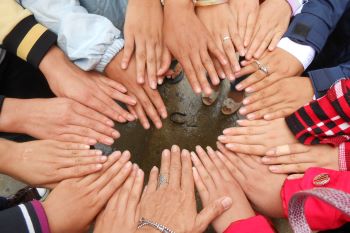
Photo courtesy of Pacific Links Foundation