
by Dana Cognetta Fritchie, AIWC Frankfurt
To mark Teacher Appreciation Week, the Education Team offers heartfelt appreciation to the teachers who inspire and shape our lives. We also asked some of the other Co-Chairs of FAWCO Teams and other FAWCO members to share with us stories of educators who have made a difference.
Teachers play a powerful role in shaping not only what we learn, but how we see the world. Alongside the stories that stay with us, they help nurture curiosity, empathy, and a lifelong love of reading.
Who are the educators that shaped your life?
Mary Adams, Human Rights Team Co-Chair, AWC The Hague: “I was an avid reader when I was 4 years old. As my older sister learned to read, I was right beside her. My parents read to us since birth. I loved reading and people reading to me. My elementary teacher Mrs. Bell read books to us after lunch. We held our breath as she read Black Beauty and other novels to us. I remember looking out the window and imagining the horse’s pain and joy. In the summers, I joined library reading clubs with an insatiable appetite for stories. I always heard Mrs Bell’s calm voice in my head.
In high school, I was in Mrs. Petruzzi’s accelerated reading class. My high school was in Houston, but Mrs. Petruzzi had a thick New Jersey accent. Her syllabus was full of classics from Shakespeare to War and Peace. I loved writing essays! I proudly shlepped an armful of Russian literature between classes rather than leave them in my locker. Who knew when an opportunity would arise with a quiet spot to finish Dostoevsky? Mrs Petruzzi also taught me that reading was high fashion when she came to school one morning wearing one black and one blue shoe.”
Lucy Andrews, Health Team Co-Chair, AWAquitaine: “As someone who loves education and going to school, I can’t say enough about the benefits of teachers, both good and sometimes not so good. Either way, they add to the rich fabric of our education as we advance. For me, school has always been something I’ve loved and benefited from; I loved almost all my teachers. I’ve had a couple who really helped me along the way, and those are the ones I’d want to recognize, the ones who say, ‘…you can do this! Good job! Keep going!’ So for that, I salute all teachers who help us see who we are, who help us advance toward what we can be, and who cheer us on as we go and get there.”
Karen Castellon, FAWCO UN Co-Liaison, AWC Berlin, FAUSA: “My best educational experience ever was in graduate school (shout out to the entire faculty at University of Virginia Darden School of Business). We used the Socratic Method. Every single one of those professors was a skilled practitioner in ‘conducting the orchestra’ of 60 MBA candidates. There was no ‘right answer.’ This has shaped how I approach life—question everything! And speak up, for goodness sake, if you can ask a clarifying question, help us see the issues from a different perspective, or advance the conversation in some way. The world doesn't need your ‘answers’—it needs your critical thinking and your willingness to act. My favorite professor was Ed Freeman. He was so funny (humor in the classroom—YAY!) and taught ethics. He is the father of ‘stakeholder theory.’ He is the only professor who sweats at the knees. That meant he really put his all into every class. At parents’ weekend, the school sent ‘pre-work’ to the parents and they attended a class with Ed. My dad still talks about it 30 years later. That’s how impactful Ed was in the classroom.”
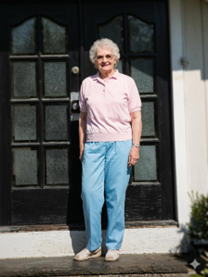
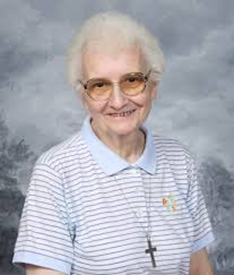
Dana Cognetta Fritchie, Education Team Co-Chair, AIWC Frankfurt: “I have been lucky to have so many wonderful educators that choosing just one feels a little unfair. They all shaped my own style as an educator. Somehow, Sister Bernadette, my high school French teacher at Notre Dame Academy, is still in my head all these years later. Luckily, it is in French, so I can ignore it when necessary. She had a way of seeing what we were capable of and then gently or not so gently, pushing us to get there, not just in her advanced French class but in life. She, like so many others at my all-girls school, truly believed in us and taught us that we could do anything, be anything, and would likely do it better than a boy. Sister Bernadette put up with our truly awful pronunciation with what can only be described as heroic patience and refused to let us give up until we got it right. I should mention here she did not have any patience for us rolling up our skirts and wearing non-uniform sweaters. Thanks to Sister Bernadette, I escaped a language requirement as an undergrad, because I was able to enter freshman year with credits because of her rigorous instruction.
She also had a remarkable sense of adventure. She took 50+ high school girls across Europe two years in a row and somehow managed to keep us all on-time and educated, and even got us into a club in Paris (where we learned, to our dismay, that nuns dance).
And through it all, in the quiet way she lived her life as a nun, she showed us what service really looks like.
I was trying to find photos of her and was sad that I couldn’t find any I had taken of her when I moved abroad. Luckily, in high school, Sr. Bernadette asked if any of us could show a family friend’s son from France what life in NYC was like, and I happily volunteered to have Sam stay with us! Sam and his mother became dear family friends after sharing some memorable times with us in both New York and our vacation home in Pennsylvania, and it was Sam who sent me her photo.”
Rosie Deane, Environment Team Co-Chair, AW Berkshire Surrey IWC: “Until I was about 14, I thought Shakespeare was really boooring. We would take it in turns around the class in English lit. to read out parts, and it was deathly dull. Then along came Mrs. Threllfall in time for my O-Level studies—our (mandatory) Shakespeare play was Macbeth. She brought in some props and makeup from the drama studio and encouraged us to dress up and play out the witches scene. Suddenly Shakespeare came to life, and it is something I’ve enjoyed ever since. Plus she had suffered from polio as a child, and was handicapped as a result, but encouraged us all that if we had children to make sure we got them vaccinated—advice I have also heeded.”
Gweneth Johnsen, AWC Madrid: “My favorite teacher was called Elizabeth Scott Taylor. She was my 3rd and 5th grade teacher, and once I went to secondary school, she became my drama teacher. She was creative, fun, made learning arithmetic a game, and made us act out all the characters in the books we read. To this day I try to emulate her style of teaching with my students.”
Rebekka Klingshirn, Heidelberg IWC: “My two favorite teachers were Mrs. Hunger and Mrs. Sieck—my elementary German and math teachers (grades 1 and 2), respectively, and the same Mrs. Sieck in grades 3–4 in both German and math. They taught me perseverance and resilience and how to be a loving and caring teacher. In addition to my mother, who at 82 is still teaching (after retiring, the last 20 years she’s been teaching refugees German), those were my biggest positive role models to become a teacher myself.”
Marelie Manders, Human Rights Team Co-Chair, Heidelberg IWC: “One of my favourite educators was Professor Michelo Hasungule, who taught me international human rights law at the University of Pretoria. He was very passionate about human rights, especially on the African continent, and taught his classes through storytelling, which really inspired me. He also encouraged me to step out of my comfort zone to join an educational human rights trip to Rwanda, which I am really thankful for. Professor Hasungule unfortunately passed away in 2024, but I will always remember him!”
Mary Manning, 3rd VP for Global Issues, Heidelberg IWC: “My favorite teacher was Sister Sharon, my first grade teacher at Saint Vincent de Paul. She was young, and so funny. She used to play an alphabet song and then would run with a pointer, pointing to each letter in the song, and we would all laugh. She made learning so much fun!”
Michelle Miller, AIWC Cologne: “I actually think of my colleague at Quinnipiac University, Sujata Gadkar-Wilcox. She created a human rights fellows program and took the students to the UN and to the Human Rights Consortium at Oxford University every year, where they presented their own research in human rights law. She really understands the importance of ‘buy-in‘ to learning!”
Tania Miller, AWC Dublin: “I was extremely fortunate to attend an all-girls Catholic school in Pittsburgh, where I grew up surrounded by teachers who truly saw us as individuals—not just students. Three of them left marks on me that I still carry today.
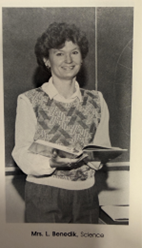
Mrs. Benedik – Biology/Science, Freshman Year: Mrs. Benedik was my first high school science teacher, and she changed the entire trajectory of my education within weeks of meeting me. She noticed almost immediately that my placement test scores had landed me in a lower-level class that didn’t reflect what she was actually seeing from me in class. She acted swiftly, went to the school administrators, and got me moved into a more appropriate setting. Because of her advocacy, I was placed in the Honours Science program for the rest of high school—a foundation that led me into nursing, and that I’m still building on today as I transition into a pharmaceutical manufacturing operations program here in Ireland. She didn’t have to notice. She didn’t have to act. But she did, and it changed everything.
Mr. Huber – Chemistry: Mr. Huber didn’t just teach us chemistry—he taught us what we were going to be up against when we left those school gates. One unforgettable day, he ‘borrowed‘ a weighing scale from the all-boys high school across the way and placed it beside ours. Theirs had electric/digital dials to adjust the scales. Ours was the same equipment our mothers had used. The lesson he delivered that day went far beyond science. He told us plainly: if we married the boys from around the corner, our money would go to their alma mater, not ours. When we entered the workforce, we wouldn’t be treated fairly simply because we were women. We would need to be stronger, smarter, and work harder to earn what we deserved—and that we would need to demand fair treatment and protect each other. Decades later, my graduating class remains one of the school’s larger donor groups. I don’t think that’s a coincidence.
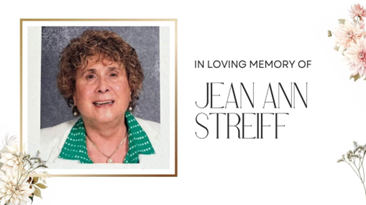
Mrs. Streiff – English and Drama: Mrs. Streiff refused to let me coast. She knew what I was capable of—she’d seen it in drama class, where I was fully alive and expressive—and she wasn’t willing to accept anything less from me. She gave me a D– on a paper I flubbed, and an A+ on my essay about Beowulf because, in her words, it had heart and independent thinking. I barely passed her English class. I had an A in Drama. When she handed back that Beowulf paper, she looked at me and said, ‘I want this to burn in your brain—what you can do when you put effort into it.‘
It did burn. Years later, during the Covid pandemic, I found myself taking an online theatre course through the Gaiety Theatre here in Dublin. Thanks to Facebook, I tracked Mrs. Streiff down and invited her to join us on Zoom for our final performance—a mini-script I had written and performed myself. She was, needless to say, extremely proud. When she shared her thoughts with the class, her words were as generous and encouraging as ever. She was never one for sentimentality—which is precisely what made her praise land so hard. It left an imprint that never faded.
Some teachers inform. The best ones form you. I was lucky enough to have three of them.
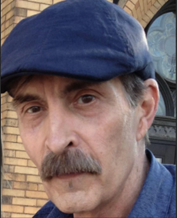
Mr. Huber
Photos courtesy of Tania Miller.
Hollie Nielsen, AWCCS; AWC London; AWEP: “Miss Eager, my 3rd and 4th grade teacher, was an amazing woman, well ahead of her time (1960s). She had travelled to India and wanted to share her experiences with our class. So we took a ‘trip‘ complete with passports, airplane tickets, saris and an in-class festival with Indian food and souvenirs. It was the first time I tasted Indian food; I still remember the scents. I learned about travel and a different culture, which really expanded my 8-year-old horizon.“
Ulrike Näumann, Heidelberg IWC: “As my favorite teacher, I would choose Lois Bach. She was the ESL teacher for my three children at Johnson Park Elementary School in Princeton, New Jersey, when we moved from Germany to the United States in 2007. For one hour each day, our children were taken out of their regular classes and taught in small groups with other students who were still learning English. Her lessons were closely coordinated with the classroom teachers. Parents were also invited in the evenings to attend presentations by the children. I especially remember the ‘wax museum‘ project, where each child represented a historical figure, such as Gustave Eiffel. Dressed in costumes from the period, the children introduced themselves in character. To me, Lois Bach represents a truly dedicated and responsible teacher because she adapted her teaching to each child’s needs. It is essential for children to learn the language of the country in which they grow up. In Germany, this is often not given enough attention.”
Lindsay Nygren, Education Team Co-Chair, AWCCS: “My favorite teacher was Ms. Stuart in elementary. She was so welcoming and supportive of all the kids in my class.”
Dawn Parker, Health Team Co-Chair, AWAquitaine: “As a nursing professional I have been blessed with incredible mentors and educators throughout my career. Nursing is a life-long learning situation and teamwork is crucial for life long learning to improve practice. One particular educator was a neurosurgeon who was the head of the residency program at a teaching hospital at Parkland in Dallas. I learned from him how to approach families with devastating news with compassion and humility, but still giving the facts in a way that had empathy and yet was understandable for families. Because of him I really became interested in helping trauma patients and their families, and he gave me the confidence to push myself to expand my knowledge.”
Maria Psarianou, Co-Chair, FAWCO Environment Team, AWO Greece: “So many wonderful teachers to choose from but I chose Miss Schildnecht. Miss Schildnecht was our 3rd grade English teacher at Socrates Greek-American Grammar School in Chicago. I remember like it was yesterday the day Miss S lined us up in double file and our march to a magical place we didn’t even know existed—the nearest public library. I think we only went once, but that day we got our first library cards. This led to a hunger to read as many books as we could borrow and many evening trips with my girlfriends returning books (before their expiration—heaven forbid we should pay the shameful late return penalty) and taking out new ones. Our tired dads would take turns driving us there after they got home from work and waited patiently for us to examamine the books and pick the ones with the most interesting titles and summaries. On the way home we would always stop for a burger or ice cream.“
Ginny Trowman, Heidelberg IWC: “I did have a good science teacher, Mr. Jays, who did great experiments in class! One experiment made a mess of the ceiling, which we found highly amusing!!“